The Switch books first orders for dual-role PM marine motors, adding an NdFeB demand lane
Finland's The Switch has won its first customer projects for the PMM850M, a combined permanent-magnet shaft-generator and propulsion machine for smaller shortsea vessels, extending NdFeB magnet demand into commercial shipping as CII emissions rules tighten.
Finland’s The Switch has secured its first commercial customer projects for a combined permanent magnet shaft-generator and propulsion-motor concept, with initial deliveries to a major marine system integrator scheduled for early 2027.
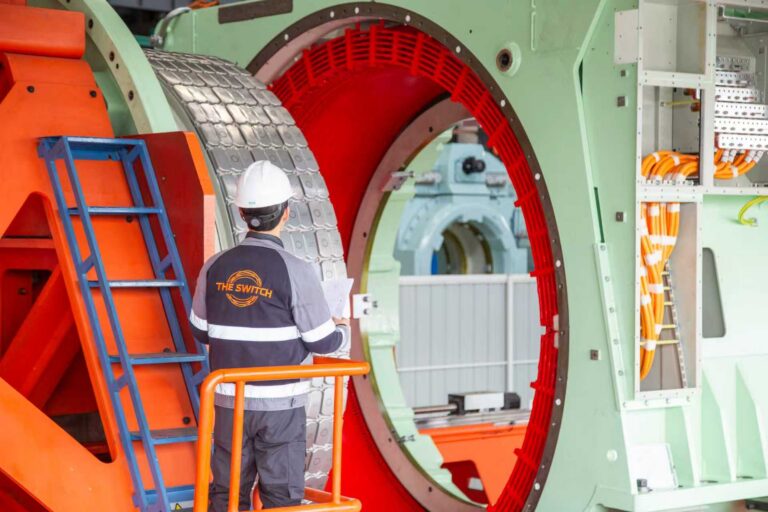
The orders center on the newly launched PMM850M, a compact water-jacket-cooled PM machine spanning 500 kW to roughly 2 MW that performs both duties in a single frame, aimed at narrow-hulled shortsea tonnage – smaller bulk carriers, product tankers and coastal traders – where engine room space is tight. Prototype verification is due by the end of 2026.
The Helsinki-based company puts the efficiency case plainly: 2–4% gains over conventional machines at rated load, widening to as much as 10% at partial load, where shortsea vessels spend much of their operating profile.
The Switch delivered the world’s first megawatt-class PM shaft generator in 2015 and leads that market today, with a shaft-generator portfolio running from 500 kW to over 12 MW and nearly 30 megawatt-class propulsion orders already booked.
The Switch was acquired in full from Yaskawa in early 2024 by Japan’s BEMAC Corporation in partnership with Mitsui & Co. Shaft generators have become a favored EEXI/CII compliance lever for deep-sea newbuilds; the tandem PM configuration now extends the same logic into propulsion itself for the smaller-vessel classes that until now ran conventional machinery.
アダマスの見解:
Commercial shipping may transition from a niche curiosity to a measurable contributor to NdFeB demand. Megawatt-class low-speed permanent magnet machines used in marine propulsion typically require higher magnet loadings per unit power than EV traction motors, though generally lower than those seen in large direct-drive wind generators — a reflection of their low-speed, high-torque operating regime.
A single dual-role machine or a shortsea newbuild series with tandem PM configurations can represent meaningful magnet volume. The Switch is well placed to benefit, with nearly 30 megawatt-class propulsion orders in addition to its established shaft-generator business.
Tightening Carbon Intensity Indicator (CII) ratings are turning efficiency gains, such as 2–4% at rated load and up to 10% at partial load, into a compliance requirement rather than an optional upgrade.
Key developments to watch include verification of the PMM850M prototype by end-2026 and initial integrator deliveries in early 2027, as well as whether other manufacturers introduce competing dual-role PM offerings. Wider adoption would help establish shortsea propulsion as a broader structural demand stream rather than a single-vendor opportunity.
業界をリードする当社のレアアース市場情報サービスについて、詳しくは今すぐお問い合わせください。