Report: China asks South Korean companies to halt exports to US defense firms
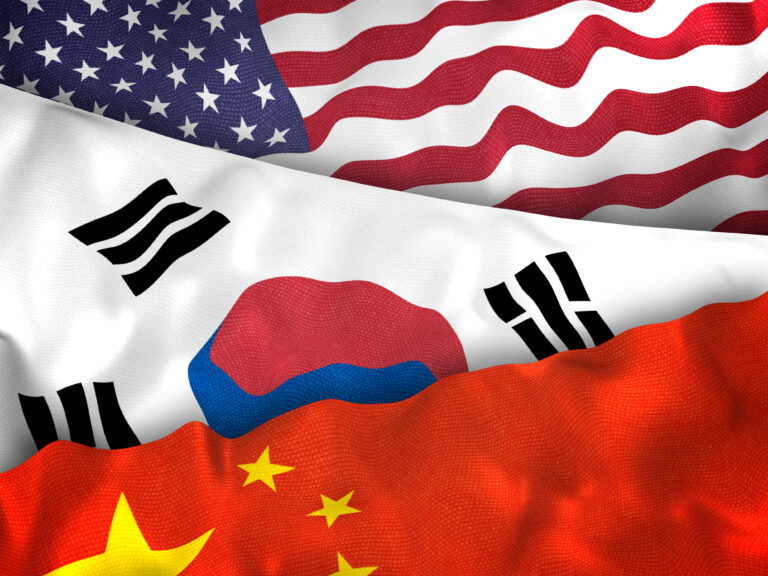
This week, China urged South Korean companies to halt exports of products containing Chinese rare earth elements to US defense firms, according to the Korea Economic Daily. This follows China's export restrictions on several rare earth elements, including dysprosium, terbium and NdFeB magnets containing those elements, announced on April 4, 2025, amid escalating US-China trade tensions and new US tariffs.
“As of yet, no facts have been confirmed”
This week, China urged South Korean companies to halt exports of products containing Chinese rare earth elements to US defense firms, according to the Korea Economic Daily.
This follows China’s export restrictions on several rare earth elements, including dysprosium, terbium and NdFeB magnets containing those elements, announced on April 4, 2025, amid escalating US-China trade tensions and new US tariffs.
The Chinese government reportedly sent letters to South Korean manufacturers in battery, electric vehicle, aerospace and other industries, warning of sanctions for non-compliance.
South Korea’s Ministry of Trade, Industry and Energy said Wednesday, “as of yet, no facts have been confirmed” and that it “is in the process of checking whether the news article is based on facts by communicating with the Chinese government and relevant industries”.
South Korean officials are in Washington this week to discuss tariffs with their US counterparts, Reuters reported.
Earlier this month, Korea’s industry ministry said the country “maintains over six months’ worth of public reserves for metals like dysprosium”, the Korea Herald published.
South Korea’s first NdFeB factory
South Korea’s first NdFeB magnet factory opened its doors in October 2023 and counts Hyundai, LG Innotek, Valeo, Posco, Vinfast, Seagate and Western Digital among its clients and partners.
Owned by Sunglim Advanced Industrial, a subsidiary of Star Group, the factory has capacity to produce 1,000 tonnes of NdFeB magnets per annum, including dysprosium- and terbium-diffused magnets, as well as cerium-containing magnets.
In 2021, LG Innotek announced development of a super-strong “eco-friendly” NdFeB magnet with Sunglim that contains 60% less heavy rare earths than competitors’ products.
In late-2024, LG Innotek announced that it developed a heavy rare earth element (HREE) free variant of its “eco-friendly” magnet with the Korea Institute of Materials Science that can operate at temperatures up to 180℃ – a potential alternative to restricted magnets from China.
Similarly, industry leader Neo Performance Materials produces a line of ultra-fine grained “MQU” NdFeB powders – an order-of-magnitude finer grained than those found in conventional sintered NdFeB magnets – that can be used to produce “MQ3” HREE-free NdFeB magnets suitable for EV motors, robot actuators and other high performance applications – another potential alternative to restricted magnets from China.
Largest importer of dysprosium oxide in 2025 YTD
While the South Korean government fact checks the allegations, we observe that they have materialized at an interesting time.
Not only is South Korea host to magnet production capacity that could partially supply the US defense industry amidst China’s export restrictions, the nation has also become a major importer of China’s dysprosium (and terbium) in recent years, reinforcing the assertion that it holds considerable reserves of the material that could be used against China’s interests.
In fact, through the first three months of 2025, customs data indicates that South Korea imported more dysprosium oxide from China than any other nation, including Japan, and over the same three-month period imported more dysprosium oxide than it did in all of calendar 2024.
It begs the question – has South Korea’s import surge raised red flags in China? Or is it merely a continuation of its volatile import history, that has seen volumes swing from year to year. As we noted in February, China is implementing a rare earth traceability system that will allow it to oversee and manage exports with surgical precision. Are we now seeing this oversight in action?

Isolated incident?
Relative to Japan – the leading producer of NdFeB magnets outside China, and the leading importer of dysprosium oxide from China – South Korea is a relatively small player leading us to question if incumbents in Japan, or even Japanese companies operating in China, have received similar alleged letters or threats of sanctions.
Same for the Philippines, the third largest importer of dysprosium oxide, which, like South Korea, imported more of the material through the first three months of 2025 than all of 2024 combined, but also has a somewhat volatile import history.
With the trade war evolving by the week, time will tell how the situation evolves.
If the latest allegations prove true, it signals a sincere fervor in China’s intent to cut off access to US defense and leaves little doubt that any export license applications for US defense-related entities will ultimately be rejected, possibly following an intentionally drawn-out review period.

다른 공급업체와 만나다
2025년 9월 토론토에서 열리는 ‘Rare Earth Mines, Magnets & Motors 2025’ 행사에 참석하여 대체 희토류 채굴업체 및 자석 제조업체 관계자들을 만나보시기 바랍니다. 이 행사에서는 주요 시장 참여자 및 업계 전문가들과 함께 이 주제를 심도 있게 논의할 예정입니다.
이틀간 진행되는 이번 행사에는 전 세계 광산에서 OEM에 이르는 공급망 전반의 비즈니스 및 기술 리더들이 한자리에 모여 5성급 호텔에서 수준 높은 토론과 네트워킹의 기회를 가질 예정입니다.
올해 컨퍼런스의 주요 주제는 로봇공학, 자동화, 첨단 항공 이동성, 그리고 상류 단계에서 통합되고 있는 신흥 ‘광산에서 자석까지’ 공급망 등이 될 것입니다.
특별 게스트: 애플의 공동 창업자 스티브 워즈니악
자세한 정보: www.adamasevent.com