China blacklists MP Materials and USA Rare Earth, activates export-control whistleblower network in three-layer enforcement push
Announcement No. 26 all but eliminates the gray-market arbitrage and re-routing that may have quietly softened the impact of earlier rare earth export controls.
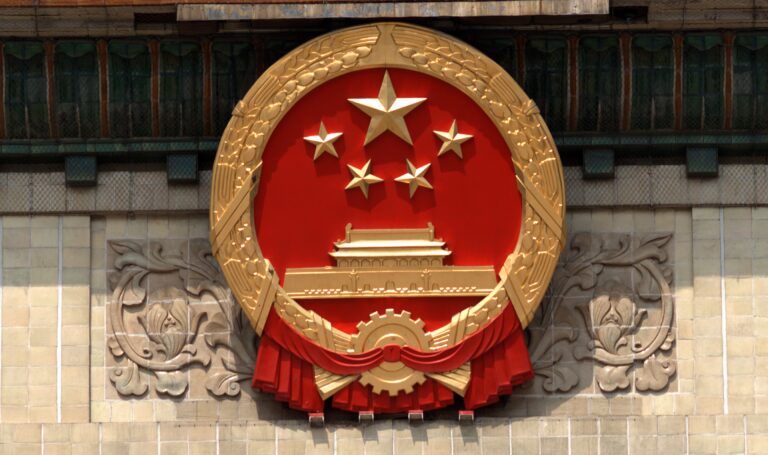
On June 22nd, China’s Ministry of Commerce issued Announcement No. 23, adding ten U.S. entities to its dual-use export control list, including MP Materials and USA Rare Earth, alongside three defense contractors and five drone and robotics firms.
The measure prohibits any export operator globally from supplying Chinese-origin dual-use goods to the named firms, bars third-country transfer of such goods to them by any party, and requires ongoing export activities to cease immediately. MOFCOM cited the Pentagon’s 9 June expansion of its 1260H military-linked entity list as the stated basis.
Two days later, MOFCOM issued Announcement No. 26, effective 1 July: a formal public reporting mechanism for violations of strategic mineral export controls. The directive, issued by MOFCOM’s Bureau of Industrial Security and Export Control, establishes a dedicated online portal and hotline for reporting suspected circumvention – with financial rewards for those who do so.
Both actions layer onto China’s domestic enforcement ramp-up. MIIT’s April draft penalty criteria for the Rare Earth Management Regulations established a strict four-tier system under which exceeding production quotas risks severe fines, license revocation, and equipment confiscation targeting unauthorized smelting, illegal feedstock sales, and failures to report accurately to China’s rare earth traceability system.
Crackdown felt domestically and abroad
In June, multiple Chinese rare earth scrap recycling enterprises flagged operating-rate declines, citing a shortage of tax-invoiced feedstock following a sustained compliance crackdown on mostly small operators. It was also revealed in June that two Japanese nationals were detained in Dalian on suspected smuggling charges, with one believed to involve rare earths.
The U.S.-China Business Council’s annual member survey, conducted in February-March and released in June, found access to critical minerals from China remains severely constrained more than 14 months after Beijing implemented export licensing controls. Of 38 companies directly affected by the controls, just 29% had actively shifted to ex-China suppliers, 47% were still searching for viable alternatives and the rest still dependent. Samarium cobalt (SmCo) magnets and yttrium were singled out by the USCBC as still “nearly unobtainable”, and finished NdFeB magnets as a structural chokepoint.
アダマスの見解:
China’s listing of MP Materials and USA Rare Earth is largely symbolic rather than immediately disruptive. In the case of MP, we understand that leadership decided even prior to China’s April 2025 export restrictions not to source critical equipment and materials from China.
MOFCOM Announcement No. 26 is the structurally more significant action and provides the enforcement tools to detect third-country routing workarounds before they become established practice. Mandatory reporting by freight forwarders and banks conscripts the entire logistics and financial intermediary chain.
These three enforcement layers – the dual-use entity list, the civil-reporting mechanism, and the domestic penalty framework – flow out of end March’s State Council Order No. 834, the overarching national-security mandate and sit within an architecture assembled since the tariff truce between Beijing-Washington which expires in November.
The delayed October 2025 extraterritorial package, which increases the number of restricted rare earths from seven to twelve, continues to loom and China has given no signal of further postponement ahead of a planned Xi-Trump summit in Beijing in September. Announcement No. 26 all but eliminates the gray-market arbitrage and re-routing that may have quietly softened the impact of earlier rare earth export controls.
業界をリードする当社のレアアース市場情報サービスについて、詳しくは今すぐお問い合わせください。