How much rare earths does an F-35 really contain?
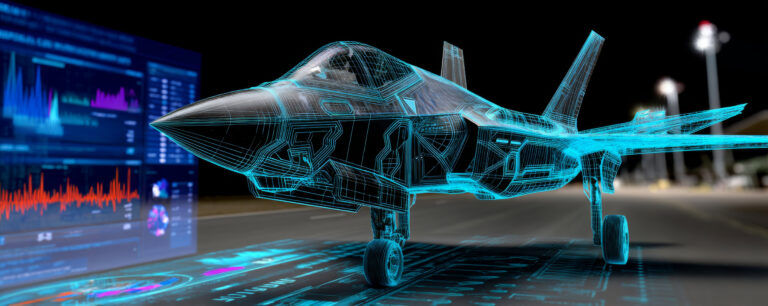
For more than a decade, defense analysts, rare-earth investors, congressional testimony and even some official DoD publications have cited a single eye-popping number: each F-35 Lightning II requires approximately 920 pounds (≈417 kg) of rare-earth materials.
Everyone knows it’s 920 pounds
For more than a decade, defense analysts, rare-earth investors, congressional testimony and even some official DoD publications have cited a single eye-popping number: each F-35 Lightning II requires approximately 920 lbs (≈417 kg) of rare earth materials.
Heard it from a colleague, who read it somewhere
The figure originates from a single September 2012 Department of Defense internal study on REE recycling feasibility that was submitted to Congress but has never been publicly released.
It appears only as a one-sentence reference in the December 2013 Congressional Research Service report (R41744) from which it has morphed into a widely cited conventional wisdom despite an utter lack of proof. No methodology, no bill-of-materials breakdown, no supporting data tables and no raw calculations have ever been disclosed.
The 2014 DoD Inspector General report (DODIG-2014-091) delivered a scathing assessment of the quality of the data and models underpinning DoD’s rare earth assessments at the time.
It stated on page 6:
“DoD lacked a comprehensive and reliable process to assess REE supply and demand.”
and
“DLA–SM did not have adequate verification and validation procedures in place to ensure realistic supply and demand inputs and did not require that the contractor use an accredited model to forecast REE supply and demand.“
The IG further noted that the economic consumption data used to estimate DoD REE demand “was not verified … as required by DoD Instruction 5000.61.”
While the IG did not single out the 2012 recycling study by name, its critique applies directly to the entire 2012-era REE data ecosystem that produced the platform-specific numbers.
In short, the 920 pound claim rests on an unreleased document produced under the very conditions the Inspector General later described as fundamentally unreliable.
Zombie statistic that just won’t die
These erroneous figures still appear today on official U.S. government websites.
The U.S. Army’s 2019 article “An Elemental Issue” repeats the 920-pound claim verbatim, as does a 2023 DoD-published analysis on energy security. The narrative has proven remarkably sticky, even as newer, more rigorous analysis has emerged.
A more recent, data-driven perspective comes from the Government Accountability Office. In its September 2024 report (GAO-24-107176), the GAO states:
“DoD uses large quantities of rare earths and other critical materials in its weapon systems but has limited influence on the markets for these materials. DoD estimates that its total demand for rare earths is less than 0.1 percent of global demand.”
This macro-level reality check underscores that even if the platform-specific claims were accurate, the Department’s overall footprint remains negligible relative to global supply.
A first-principles reality check
An F-35 is a highly electrified “power-by-wire” aircraft, but its rare-earth content is governed by physics, not marketing or recycled 2012 assumptions.
Permanent magnets dominate the mass, and only one figure bodes reliable and has been repeatedly corroborated: ≈23 kg (50 lbs) of samarium-cobalt (SmCo) alloy per aircraft.
This is used in high-temperature actuators, the Honeywell Integrated Power Package (IPP) turbomachine/lube pump and F-35B lift-system components.
Multiple 2025 reports, including detailed New York Times coverage of Lockheed Martin’s samarium usage, confirm this exact quantity. SmCo is ≈23–36% samarium by weight, yielding roughly 5.3–6.5 kg of pure Sm.
NdFeB magnets (used in cooler auxiliary motors, pumps, fans, weapons-bay doors and AESA radar elements) are far more magnetically efficient.
Aerospace-grade NdFeB motors typically contain only 5–15% magnet mass by motor weight, with REEs making up 25–32% of the magnet alloy.
Across the dozens of lower-power units on the F-35, this adds an estimated 8–20 kg of NdFeB alloy, or 3–6 kg of pure REEs (primarily Nd/Pr with minor Dy/Tb).
Yttria-stabilized zirconia (YSZ) thermal barrier coatings on the F135 engine’s turbine blades and vanes are ultra-thin films (100–500 µm). Total YSZ ceramic mass per engine is therefore modest; the yttrium fraction is only 7–8 wt%, producing 0.4–1.2 kg pure Y.
All other uses – Nd:YAG laser crystals in the EOTS, YIG filters in the radar/EW suite, radar-absorbent coatings, sensor dopants and minor phosphors – are in the gram-to-low-kilogram range and contribute negligibly to total REE mass.
Realistic totals per F-35
- Finished REE-bearing material: 40–70 kg
- Pure elemental REEs: 11–20 kg
This is 3–4 % of the often-quoted 417 kg (920 pound) figure and roughly 0.3 % of the aircraft’s empty weight.
To put it in perspective, on the basis of combined motor power, it is still orders of magnitude higher per kilowatt than modern EV traction motors (≈1 kg NdFeB per 120 kW peak), but only because aerospace demands extreme temperature, vibration and reliability margins – yet nowhere near the “hundreds of kilograms of magnets” sometimes claimed in investor decks and flashy infographics.

The above estimates are derived from publicly confirmed component counts (based on Moog, Honeywell and Lockheed Martin disclosures), typical aerospace motor and coating loadings, alloy compositions and cross-checked against 2025 reporting.
They align with the physics of permanent-magnet motors and thin-film coatings – no classified BOM required.
Bottom line
The 920 pound (417 kg) figure has been repeated so often that it has taken on a life of its own, yet its original source remains classified, unreleased and produced under data-quality conditions the DoD Inspector General itself described as deficient.
Even today it lingers on official government websites, while the GAO’s 2024 analysis reminds us that the DoD’s entire REE demand is less than 0.1% of global consumption.
A first-principles engineering audit shows the F-35’s actual rare earth footprint is an order of magnitude smaller – still strategically vital because of the specific high-performance, high-temperature grades (SmCo and HREE-doped NdFeB) involved and high reliance on non-U.S. processing – but nowhere near the scale that some supply-chain narratives suggest.
For investors, policymakers and defense planners, the real risk is not bulk tonnage but the concentration of supply for those irreplaceable, high-coercivity grades.
That is the conversation worth having.
Contact us today to learn more about our industry-leading Rare Earth Market Intelligence services.