| | 4 minute read

Tesla could capture half the US humanoid robot market by 2027

Tesla’s 2027 lead will depend on repeating its EV strategy - mass production, cost leadership and ecosystem control - while competitors carve out specialized roles in a rapidly expanding market.

A new tesla optimus bot robot on display at the tesla showroom at santana row, san jose

One small step for an industry, one giant leap for mankind

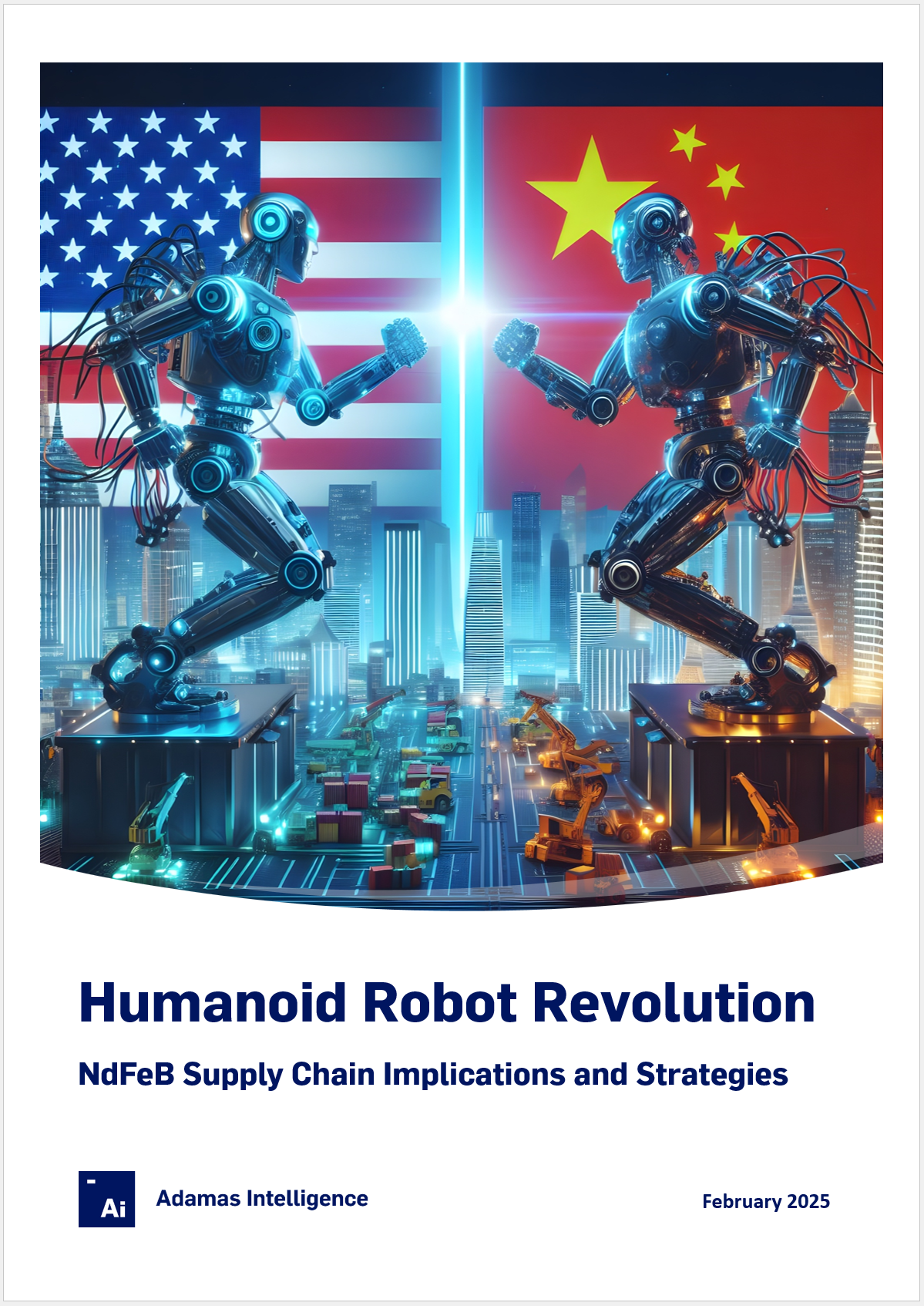
In 2025, the US humanoid robot industry is taking its first bold steps, with Adamas projecting just over 3,200 units will be produced across key players, a figure poised to grow more than tenfold to 36,700 by 2027.

Tesla, mirroring its electric vehicle (EV) dominance, is on track to capture nearly half the market by 2027, leveraging its manufacturing might and AI expertise.

Competitors like Agility Robotics, Figure AI, Boston Dynamics, Apptronik and emerging players are also scaling, driven by strategic partnerships and early deployments. However, for these projections to come to fruition, robot prices must continue to fall, use cases must prove viable, regulatory barriers must ease and supply chains must hold firm.

One small step for an industry, one giant leap for mankind

Tesla’s expected 2025 output of 1,200 Optimus units, used internally in its US Gigafactories, reflects Elon Musk’s guidance of “over 1,000” for testing. By 2026, we expect production will triple to around 4,000, and by 2027, it will more than quadruple to 18,000, echoing Tesla’s EV market ascent (over 50% US share by 2023) through scale and innovation.

Tesla’s path to 49% of the 2027 market hinges on external sales starting in 2026, price cuts closer to $20,000, and navigating potential supply constraints – much like it overcame early EV charging hurdles.

We expect that Agility Robotics will match Tesla’s 1,200 units this year at its Oregon RoboFab, aligning with its “hundreds” initial capacity. Scaling to 3,000 in 2026 and 7,500 by 2027 reflects its 10,000-unit factory cap and supply deals with Amazon and GXO, though proving Digit’s cost-effectiveness (currently $100,000+) and expanding facilities are key.

We estimate that Figure will turn out around 650 units in 2025, shipped to BMW and a second US client, then grow to 3,000 in 2026 and 9,000 by 2027, inferred from its 100,000-unit four-year goal (by 2029). With $675 million raised, Figure must lower prices below $50,000, if it hasn’t already, and continue to validate broader applications.

Moreover, we estimate that Boston Dynamics will produce around 50 Atlas robot units in 2025, doubling to 100 in 2026 and again to 200 by 2027, consistent with its cautious shift to commercial use via Hyundai’s US trials. In our model, Apptronik’s Apollo, at 100 units in 2025, quadruples to 400 in 2026 and hits 1,000 by 2027, backed by $350 million and partnerships with Mercedes and Amazon. Both need proven use cases – Atlas in precision tasks, Apollo in logistics – to scale, alongside regulatory clarity for workplace integration.

Lastly, other new entrants (“Other”) contribute 40 units in 2025, rising to 400 in 2026 and 1,000 by 2027, as tech costs drop and niches like hospitality emerge.

Still hurdles to overcome

For this tenfold growth to materialize, the industry must replicate the EV boom’s key catalysts. Prices must halve through economies of scale, use cases (e.g., logistics, manufacturing) must deliver ROI, regulators must streamline safety approvals and supply chains must avoid semiconductor, battery, permanent magnet and other material shortages.

Tesla’s 2027 lead will depend on repeating its EV strategy – mass production, cost leadership and ecosystem control – while competitors carve out specialized roles in a rapidly expanding market.

NdFeB demand incoming

In terms of NdFeB magnet demand, the 36,700 robot units produced in 2027 will generate just 100 to 150 tonnes of demand, however, extrapolating out to 2030 and this level approaches 1,000 tonnes per annum, equal to the full output of some emerging magnet factories.

In the years post-2030, we expect this figure will continue to grow by multiples, adding impetus for a steady buildout of US magnet manufacturing capacity.

Mehr zu diesem Thema unter „Rare Earth Mines, Magnets & Motors 2025“

Besuchen Sie uns im September 2025 in Toronto auf der „Rare Earth Mines, Magnets & Motors 2025“, wo wir dieses Thema gemeinsam mit führenden Branchenexperten vertiefen werden.

Die zweitägige Veranstaltung bringt Führungskräfte aus Wirtschaft und Technik aus der gesamten globalen Lieferkette vom Bergbau bis zum OEM zusammen, um in einem 5-Sterne-Hotel hochkarätige Diskussionen zu führen und Kontakte zu knüpfen.

Zu den Schwerpunktthemen der diesjährigen Konferenz zählen Robotik, Automatisierung, fortschrittliche Luftmobilität sowie die sich entwickelnde Lieferkette „vom Bergwerk zum Magneten“, die sich im vorgelagerten Bereich zusammenfügt.

Besonderer Gast: Steve Wozniak, Mitbegründer von Apple

Weitere Informationen: www.adamasevent.com

Rem3 2025 mit Woz v3
Zurück zu Adamas Inside
Dieser Inhalt ist ausschließlich für Adamas-Insider bestimmt

Werden Sie Mitglied bei Adamas Inside und erhalten Sie kostenlosen Zugang zu exklusiven Einblicken, Studien und Daten

  • Elektrofahrzeuge, Batterien und Batteriematerialien
  • Motoren, Magnete und Seltene Erden
  • Preise, Richtlinien, Handel und mehr
Kostenlose Mitgliedschaft
Adamas Inside beitreten
8