Rare earths: Robotics remain the new frontier of medium- to long-term demand


Hype today, history tomorrow
From one of the smallest end-use segments today, led by industrial and consumer service robots, we continue to forecast that robotics will grow to become the single largest NdFeB demand driver by 2040, driven by accelerated deployment of humanoid robots across manufacturing, logistics, defense, and eventually household applications.
Tesla CEO Elon Musk has long projected a future with billions of humanoid robots, and recent progress reinforces the potential for explosive long-term growth – potentially exceeding our earlier expectations, with annual sales reaching tens of millions or more by 2040. While near-term hype from Tesla and others has at times appeared overblown, and critiques of a potential market bubble are valid today, the underlying trajectory remains strongly upward.
The future walked in and it’s staying
We are now well beyond the outset of commercial-scale humanoid robot production and deployment.
By late 2025, multiple companies have achieved meaningful production milestones:
- Chinese firm Agibot has ramped to thousands of units annually.
- Figure AI has deployed its Figure 02 and 03 robots in real factory settings, including an 11-month pilot at BMW’s Spartanburg plant contributing to the assembly of over 30,000 vehicles.
- Tesla has demonstrated rapid advancements in Optimus, including human-like running and factory testing, with pilot production underway and plans for several thousand units in 2025–2026.
These developments mark a phase more akin to the 2015–2020 EV era, when production was scaling but far from mature.
As with EVs, renewable energy, and other transformative technologies, the humanoid robotics sector has experienced faster-than-expected early progress in some areas (e.g., AI-driven dexterity and locomotion) while facing delays in others (e.g., cost, reliability, and broad commercial viability).
Recent warnings from experts and even Chinese authorities highlight bubble risks amid heavy investment and similar designs flooding the market.
Near-term expectations for widespread deployment remain overstated, but the long-term potential—fueled by labor shortages, aging populations, and AI breakthroughs—has only strengthened.
We expect initial proliferation of humanoids and other advanced robots in controlled manufacturing and logistics environments to accelerate from 2029, extending to defense applications in the early 2030s and households by the mid-2030s.
Collectively, this should drive annual production to tens of millions of units by 2040 – potentially higher than we previously anticipated as costs fall and capabilities improve.
Nevertheless, our NdFeB demand projections for robotics err responsibly on the conservative side, but we remain mindful of the explosive growth seen in EVs, wind, and solar – markets that repeatedly outperformed even bullish forecasts – when looking towards the upside.
In any case, robotics remain poised to eclipse EVs as the primary driver of rare-earth magnet demand over the medium- to long-term.
A must-have resource for anyone with a professional interest in the mine-to-magnet supply chain
Empower your organization to seize opportunities and navigate risks with the latest, most comprehensive industry analysis, market data and forecasts available.
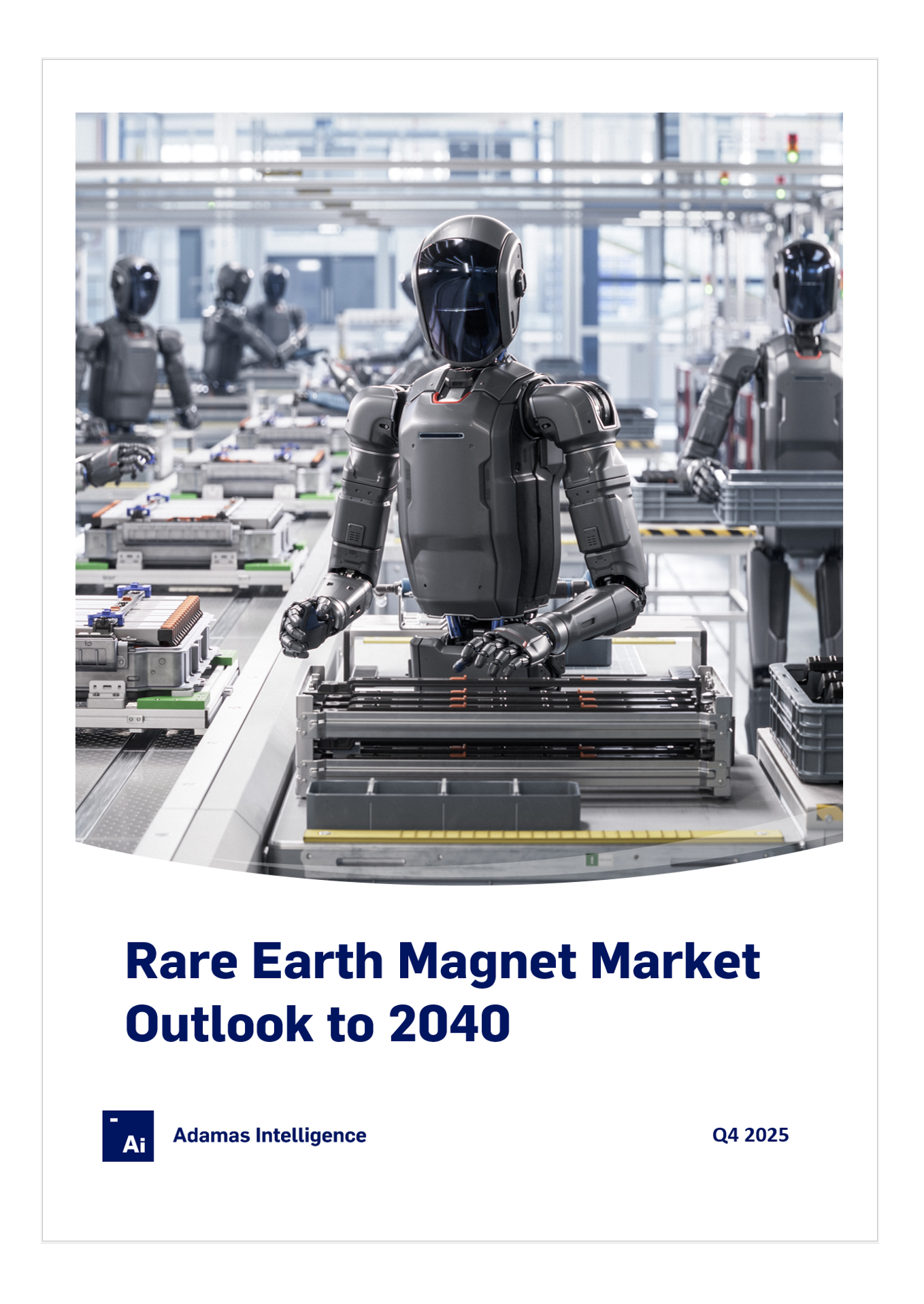
Our new Rare Earth Magnet Market Outlook to 2040 report is a must-have resource for project developers, miners, processors, metal makers, magnet makers, end users, institutional investors, government agencies and other stakeholders with a professional interest in the mine-to-magnet supply chain.
Contact us for more information about the new report and our other industry-leading services.