Iran war oil spike spurs EV searches but near-term demand impact likely muted


Once gasoline reaches around $4 per gallon, shoppers begin shifting toward electric models
The 50% surge in crude oil prices to above $120 per barrel since the Iran war began at the end of February has triggered a fresh wave of consumer interest in electric vehicles. Online car-buying platform Edmunds reported an uptick in EV-related searches, while CarEdge, an AI-powered service that assists buyers in negotiating with dealerships, saw traffic to popular models such as the Tesla Model Y and Chevrolet Equinox double, according to Bloomberg.
US car dealers have long used a rough benchmark: once regular gasoline reaches around $4 per gallon, shoppers begin shifting toward electric models. By April 1 the national average had climbed to $4.06, with California prices nearing $6 and Texas holding at $3.77.
Russia’s 2022 invasion of Ukraine produced a sharper spike, pushing averages above $5 per gallon; EV sales subsequently rose significantly in the following years before dropping sharply after federal subsidies were withdrawn at the end of September 2025. Some states, including California and New York, continue to expand their own incentive programs.
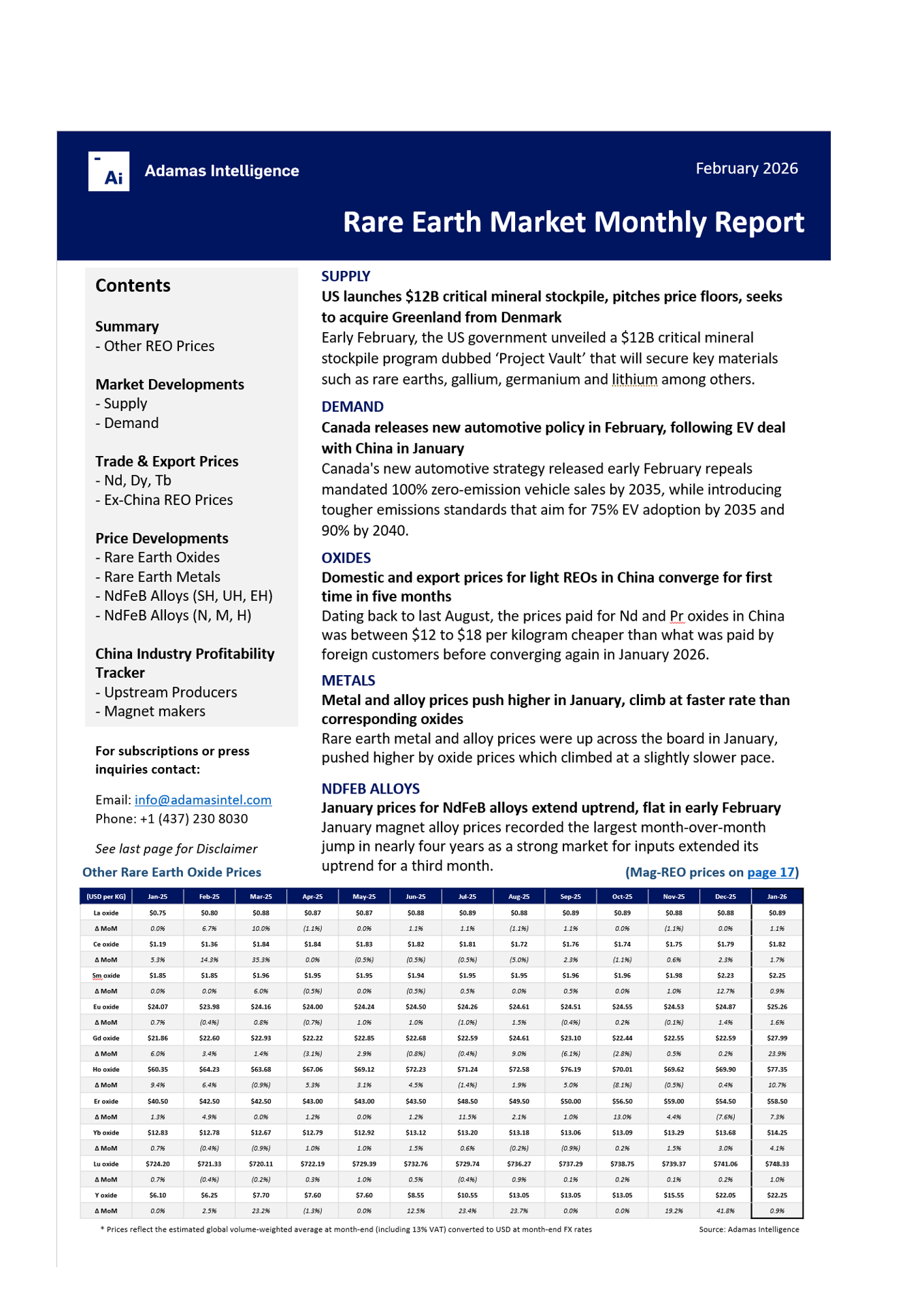
Rare Earth Market Monthly
Oxide, metal and NdFeB price assessments, market analysis and data
Adamas take:
Vehicle purchases remain among the largest household expenditures and are rarely driven by short-term price swings. That said, multiple studies, including work from the US National Bureau of Economic Research, consistently identify gasoline prices as the single strongest factor influencing decisions to go electric.
President Trump’s stated desire to end the conflict quickly could reverse the oil rally in the near term, and the US is relatively insulated compared with many Asian and European markets. Even so, EVs in North America still carry a meaningful upfront premium versus internal-combustion vehicles despite favorable total cost of ownership. A sustained period above $150 per barrel would be required to shift buyer behavior more structurally, with greater effects likely in countries facing steeper fuel costs and ready access to low-priced Chinese EVs.
Passenger EVs and e-mobility applications already account for nearly 30% of global NdFeB magnet demand according to Adamas data and are projected to grow in coming years regardless of oil-price direction; even a modest acceleration in electrification would therefore carry outsized implications for rare earth magnet markets.
Contact us today to learn more about our industry-leading Rare Earth Market Intelligence services.