Stellantis’ $26 billion EV reset – a potential net positive for NdFeB magnet demand via EREV pivot

Refocusing on a multi-energy portfolio
In early February, Stellantis announced charges of approximately €22.2 billion (~$26 billion) as part of a major strategic reset, driven by overestimating the pace of EV adoption amid weaker consumer demand.
The writedown covers canceled or scaled-back EV programs, supplier contracts and related assets, pushing the company to a significant 2025 net loss, dividend suspension and balance sheet adjustments.
This follows a broader industry trend of EV pullbacks (e.g., similar charges at Ford and others), with Stellantis refocusing on a “multi-energy” portfolio: internal combustion, conventional hybrids and range-extended electric vehicles (EREVs) to better align with customer preferences for range, convenience and lower upfront costs.
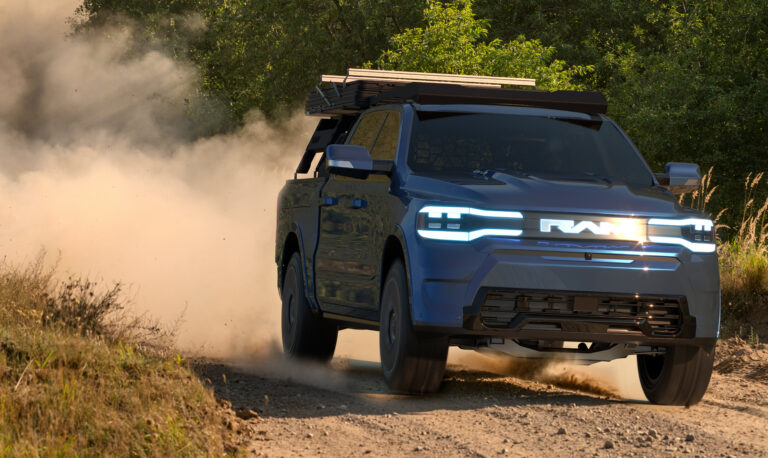
Notably, Stellantis has phased out traditional plug-in hybrids (PHEVs) like Jeep Wrangler/Grand Cherokee 4xe and the Chrysler Pacifica Hybrid in North America starting with the 2026 model year, redirecting efforts to non-plug hybrids and EREVs (e.g., upcoming Ram 1500 REV, Jeep Grand Wagoneer REEV variants).
Stellantis, like other Western automakers (e.g., Ford, GM exploring similar shifts), is expected to pivot further into EREVs. These vehicles often feature powerful permanent magnet synchronous motors (PMSMs) for propulsion and efficient generators, relying heavily on high-performance NdFeB magnets – typically more per vehicle than an average BEV due to dual motor and generator use.
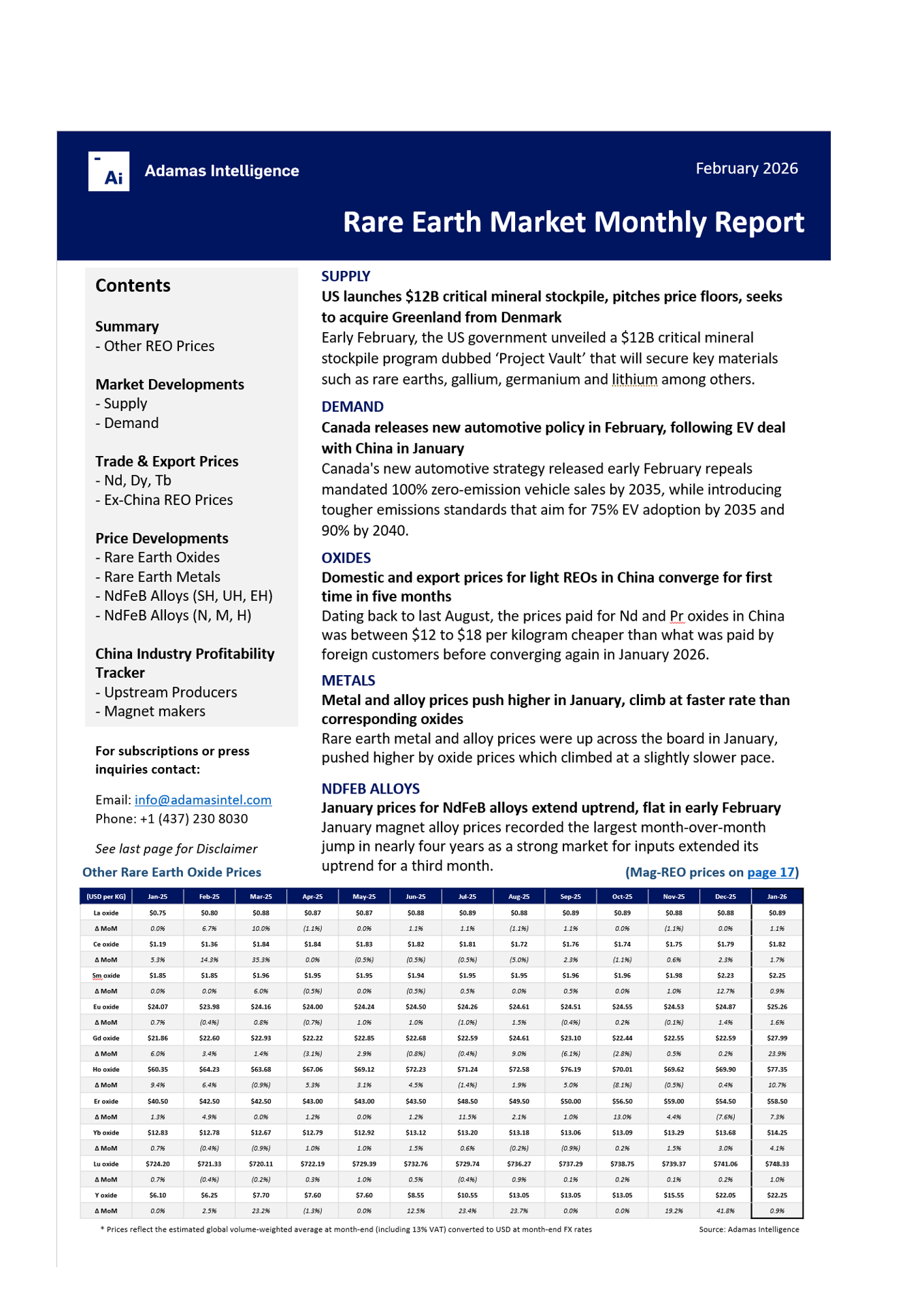
Rare Earth Market Monthly
Oxide, metal and NdFeB price assessments, market analysis and data
Adamas take:
Ultimately, as we have noted several times over the past 24 months, the shift to PHEVs and especially EREVs could prove a net positive for NdFeB magnet demand in the US, Europe, and elsewhere – just as it did in China in 2023/24, when EREV popularity (e.g., Li Auto, extended-range models) drove robust growth in rare earth magnet consumption despite slower pure BEV uptake.
While pure BEV slowdowns may temper short-term magnet demand volumes in the West, the EREV emphasis could soon offset this by prioritizing magnet-intensive architectures in high-demand segments like trucks and SUVs.
This underscores NdFeB’s enduring role in efficient electrified powertrains, even as the industry recalibrates away from aggressive BEV-only strategies. Monitoring Stellantis’ forthcoming product launches and regional adoption will clarify the scale of this magnet demand tailwind.
Contact us today to learn more about our industry-leading Rare Earth Market Intelligence services.